Chi si sta occupando dell'etica? | Who is dealing with ethics?
-
Davide Belotti
- 27 Jan, 2026
- 11 Mins read
🇬🇧 English version below
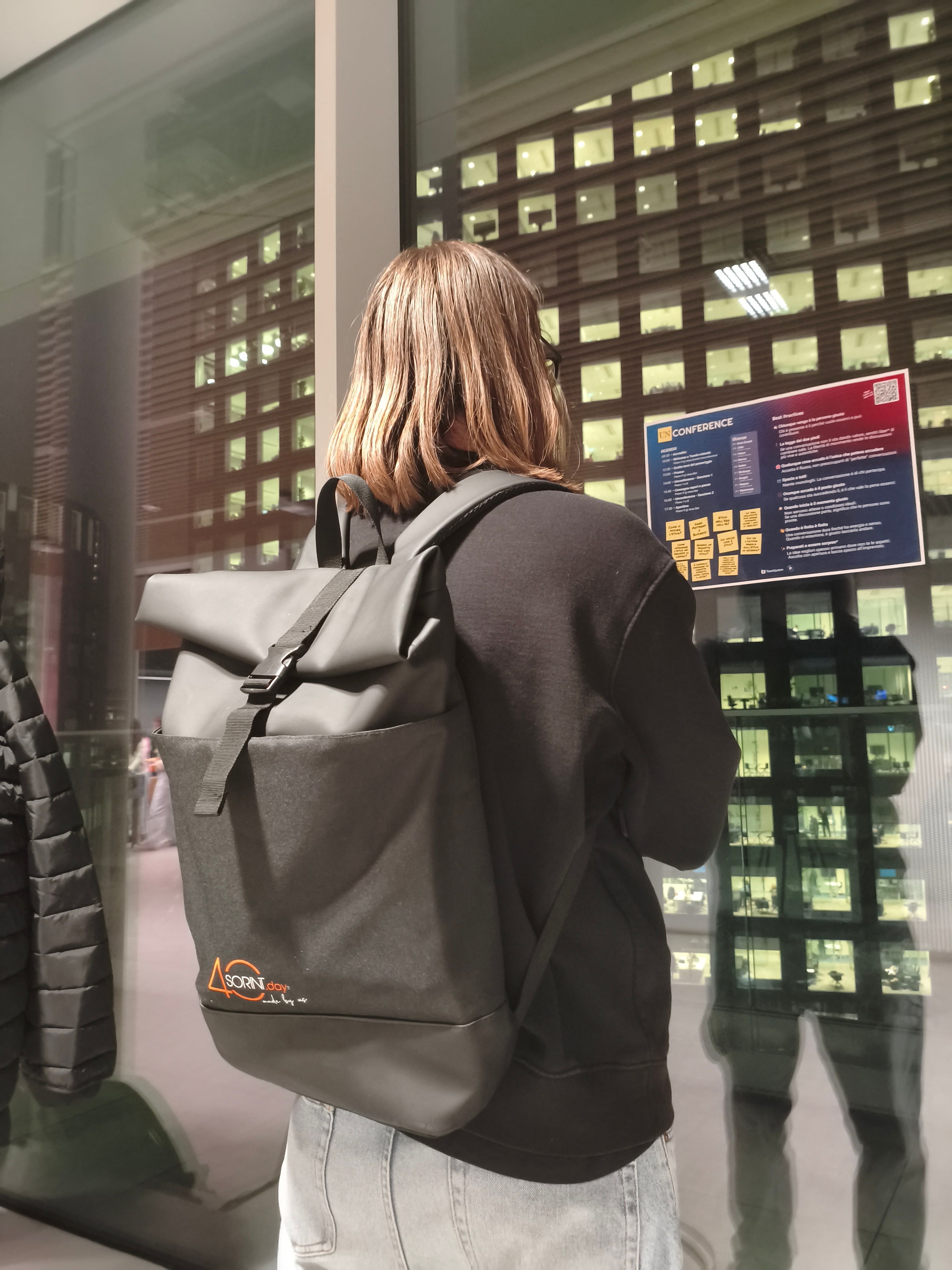
Venerdì 23 gennaio ho partecipato a Ethics by Design Unconference**, un evento organizzato da TeamSystem (Experience Design Group) insieme a District, ospitato presso la sede TeamSystem di Milano.**
Non è stata la classica conferenza “da palco”, ma una giornata orizzontale e partecipativa, costruita attraverso conversazioni tra professionisti con ruoli diversi (design, prodotto, sviluppo, dati e AI), con un obiettivo chiaro: portarsi a casa più strumenti e maggiore lucidità per progettare tenendo conto dell’impatto reale delle decisioni.
Il filo conduttore? Etica applicata al lavoro di tutti i giorni: dalla privacy ai dark pattern, fino alle implicazioni dell’AI nei prodotti digitali.
Cosa e come
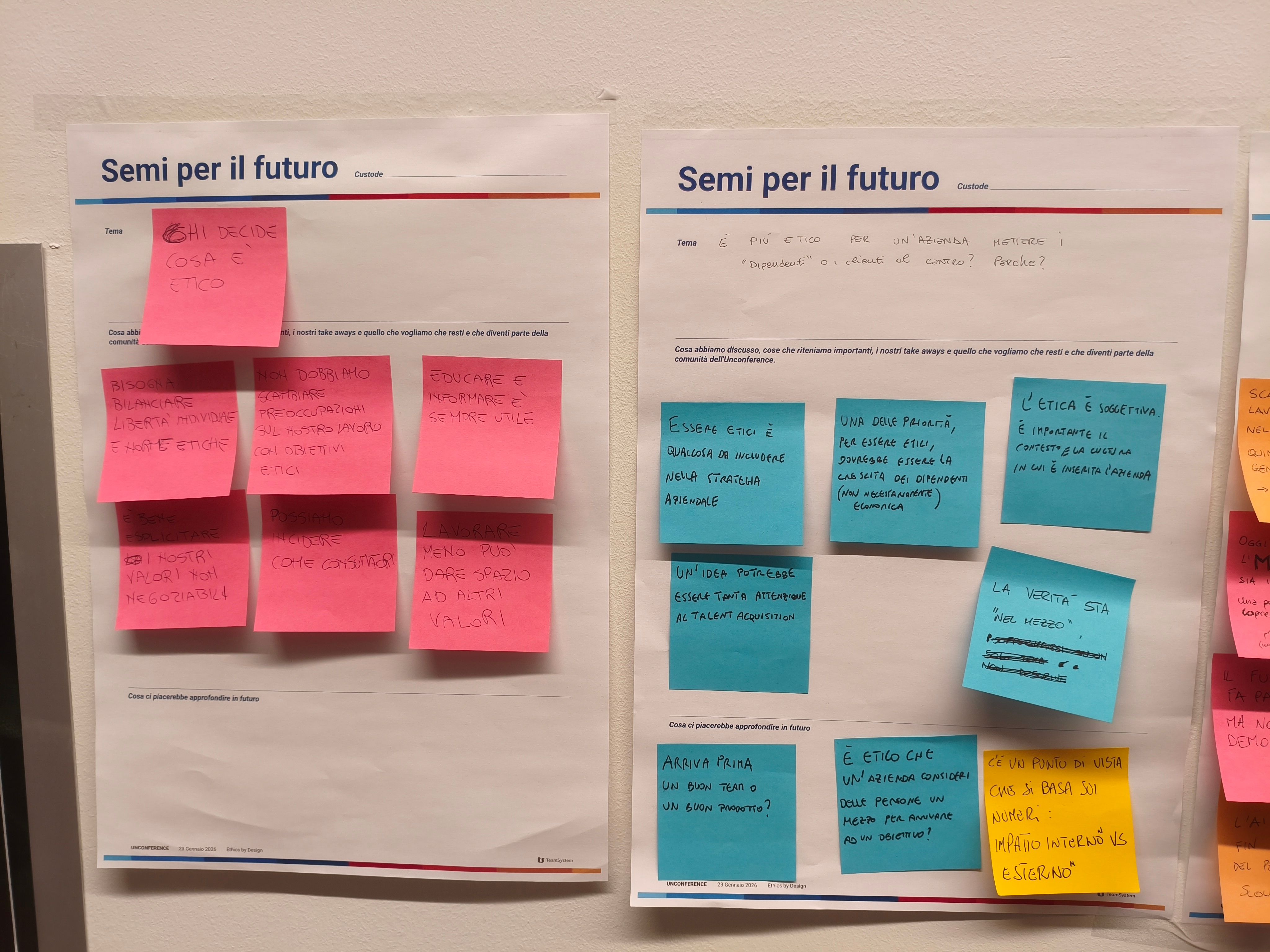
Come si deduce dal titolo, una Unconference è di fatto una non-conferenza**: un contesto in cui i contenuti rientrano in un grande tema comune, ma le discussioni vengono definite insieme ai partecipanti, dando voce a tutti e votando poi quelle ritenute più interessanti.**
Ad aprire la giornata e a lanciare alcuni spunti chiave sono stati sei professionisti, che hanno introdotto punti di vista differenti, sia per ruolo sia per esperienza.
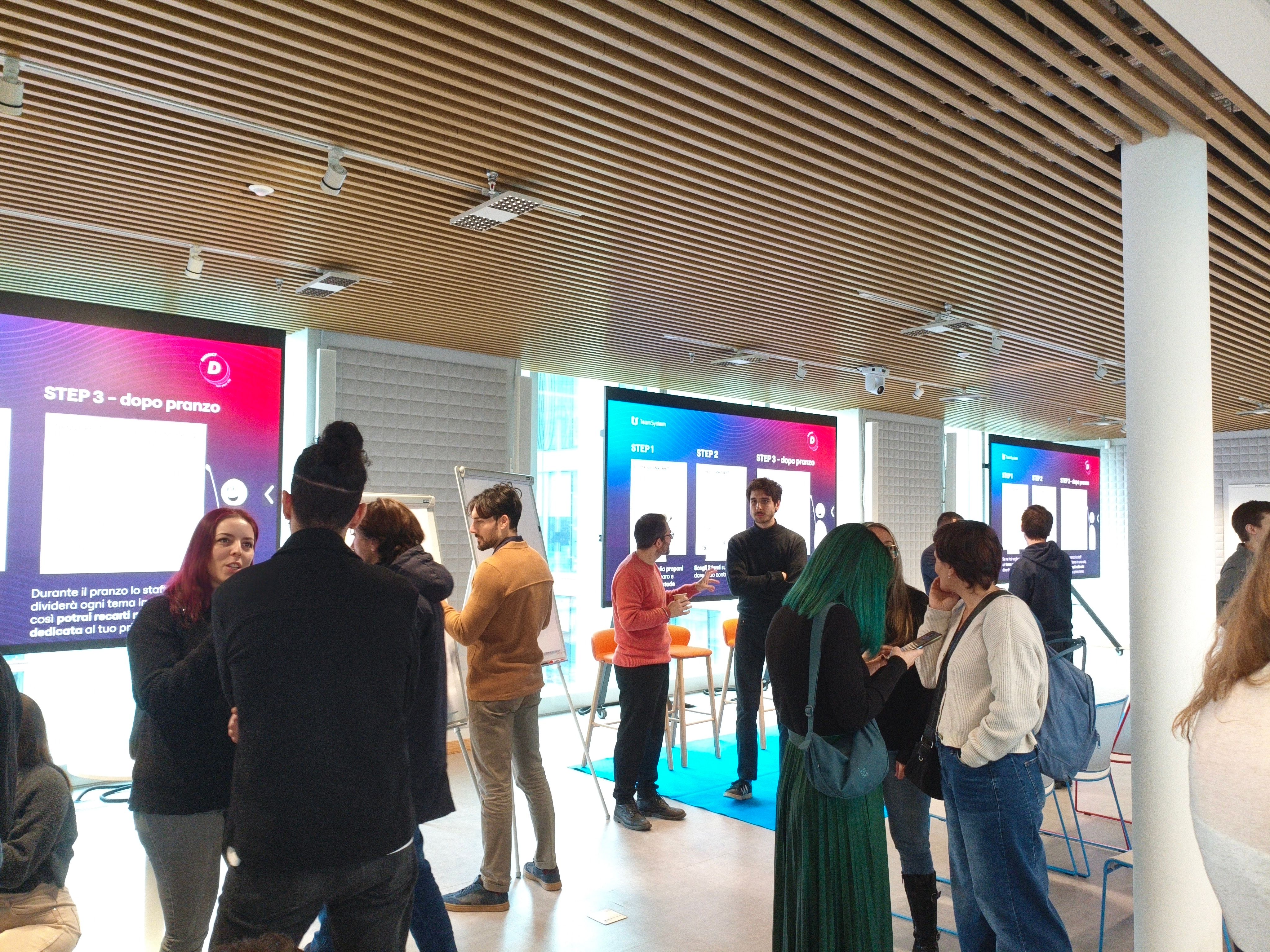
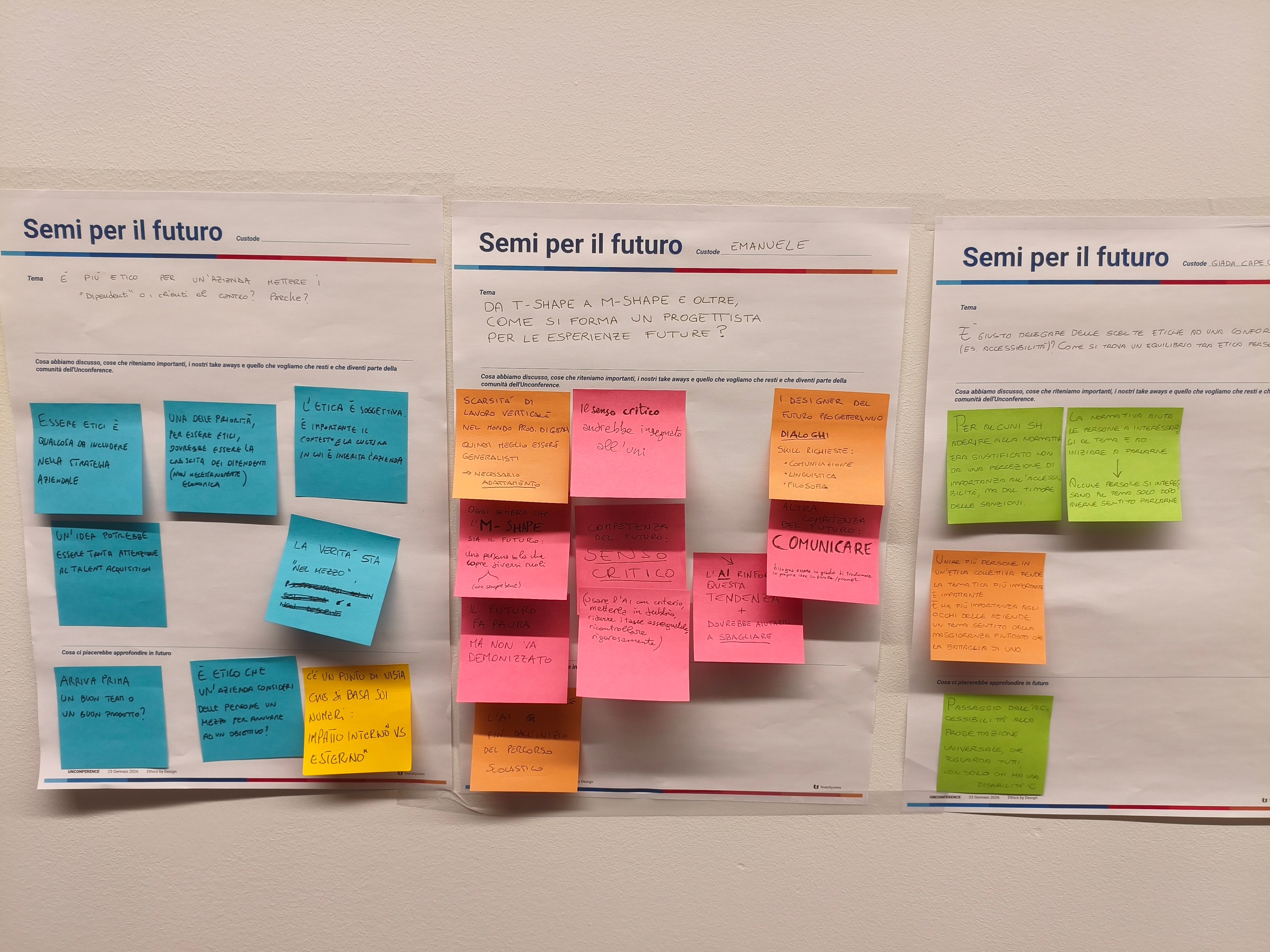
La giornata è stata poi scandita da sessioni durante le quali ognuno era libero di spostarsi tra diverse stanze per dibattere sugli argomenti più votati dai partecipanti. Questo ha garantito una partecipazione praticamente totale e ha favorito quella fase tipica del design thinking chiamata “divergenza”, capace di aprire il maggior numero possibile di strade e interpretazioni su un tema o un’idea.
Tra i professionisti più influenti e conosciuti è giusto menzionare: Matteo Tibolla (UX Researcher), Giuseppe Mincolelli (Architetto e Designer, Professore Ordinario all’Università di Ferrara), Alessandro Di Benedetto (Design Director di Sketchin), Emanuele Fabbiano (Head of AI di Xstream), Francesca Tosi (Product Manager di Fiscozen) e Saverio Campisi (Senior Product Manager in UnipolTech).
Argomenti chiave
Etica: l’uomo al centro, non le macchine
Il punto di partenza è stato l’introduzione del concetto di “etica” e il tentativo di definirlo e collocarlo nelle sue diverse declinazioni in ambito tech. Etica, da ethos (comportamento) e molto vicina a ethnos (popolo), si riferisce allo studio delle conseguenze dei comportamenti umani.
Come ha spiegato il prof. Mincolelli, non esiste etica senza includere le persone: non l’AI al posto dell’essere umano, ma l’AI insieme all’essere umano.
Durante un esempio tratto dalla sua esperienza nello sviluppo di un prodotto basato su AI, è emerso come, senza il coinvolgimento diretto delle persone nella fase di test dei prototipi, non sarebbe mai emersa la “dignità” come caratteristica fondamentale dell’esperienza utente. «Le persone restavano insoddisfatte dell’impossibilità di poter ringraziare la macchina (AI)».
Le macchine non sanno cosa sia l’empatia: possono provare a simularla in modo statistico, tramite pattern e probabilità, ma perdendo moltissime sfumature che rendono ogni essere umano diverso dall’altro.
Il professore ha infine sottolineato la necessità di uno shift left dell’etica nella progettazione: introdurla come parametro fin dall’inizio del processo e testare subito con le persone, per fallire presto e imparare rapidamente come rendere il prodotto più etico.
Hai la coscienza a posto?
«Se domani partisse un’inchiesta giornalistica pubblica sul prodotto che avete costruito, e conversazioni, call, file ed email venissero resi pubblici e analizzati, vi sentireste a posto con ciò che emergerebbe?»
Questo spunto è stato particolarmente potente. Non serve aggiungere altro: parla direttamente di etica.
Transparency always wins
Spesso non ci si rende conto di quanto la dimensione etica di un prodotto — come la trasparenza su costi, abbonamenti, flussi o gestione dei dati — sia diventata centrale sia per la UX sia come vero e proprio posizionamento di mercato.
Se l’utente si sente sicuro del prodotto che utilizza, sa come vengono gestiti i dati, cosa accade durante un pagamento, come funzionano i resi o cosa succede quando preme un pulsante, sarà più propenso a usarlo e a tornarci nel tempo. Non è poco.
Un esempio significativo non riguarda tanto l’onboarding, quanto l’offboarding e la sua facilità. Spesso quest’ultimo viene volutamente reso complesso; al contrario, dovrebbe essere progettato con cura, eliminando i dark pattern.
E quando perdo?
Un altro punto cruciale, collegato al precedente, è che oggi trascurare la dimensione etica e morale di un prodotto può avere un costo così alto da arrivare a distruggerlo completamente.
Cosa progettiamo oggi
Quando progettiamo, stiamo progettando una relazione. Se l’etica non viene inserita fin dall’inizio del processo, insieme alle persone, non è possibile osservare l’etica né spostarsi davvero sulla dimensione umana dello Human-Centered Design.
Michele De Lucchi afferma: «Gli architetti, più che gli spazi, progettano modi di viverli». Questa frase riassume bene la responsabilità etica di chiunque progetti qualcosa: influenzare ambienti, persone e comportamenti per minuti, ore, giorni o anni.
Oggi l’etica è tutta da costruire, così come l’AI. Se l’AI tende a descrivere il ruolo del medico come maschile e quello dell’infermiere come femminile, è forse perché statisticamente più probabile, ma anche perché la società e i documenti prodotti finora hanno consolidato questo stereotipo. Se ciò che costruiamo è lo specchio della società in cui viviamo, ha senso interrogarsi prima sulla società stessa.
Testi e spunti
Risorse personali ed emerse durante l’evento per approfondire i temi di questo articolo:
🎥 Video di Joycee Days dove si parla di come “l’etica vince sempre”
https://youtu.be/mDPrFM3439s?si=SDdsxfvQXzTb3o6D
⚙️ Sito dove trovare spunti sul design etico
https://www.ethicsfordesigners.com/
**
**
📘 L'intelligenza condivisa – Ethan Mollick (2024)
- Co-intelligenza e Copilota: La AI non è un semplice software o un rimpiazzo, ma una mente "aliena" con cui collaborare. Il valore risiede nell'usarla come un copilota per potenziare le capacità umane, affrontando insieme le sfide del XXI secolo.
- La Frontiera Frastagliata (Jagged Frontier): Le capacità della AI sono imprevedibili e non lineari. Alcuni compiti complessi per l'uomo sono facilissimi per lei, mentre altri compiti banali le risultano impossibili; l'unico modo per mappare questo confine invisibile è usarla costantemente per ogni attività.
- Modelli Centauro e Cyborg: Esistono due modi per lavorare con la AI: il "Centauro", che divide strategicamente il lavoro tra uomo e macchina, e il "Cyborg", che intreccia costantemente l'azione umana con quella dell'algoritmo in ogni fase del processo creativo.
📘 Etica dell'Intelligenza Artificiale – Luciano Floridi (2022)
- Divorzio tra Agire e Intelligenza: L'IA è una riserva di capacità d'azione in grado di risolvere problemi complessi con successo senza necessità di essere intelligente, cosciente o senziente.
- Quadro etico dei 5 principi: Per una governance corretta occorre seguire: beneficenza, non maleficenza, autonomia, giustizia ed esplicabilità (intesa come intelligibilità e responsabilità).
- Design come attività innovativa: Il futuro dell'IA non è scritto, ma dipende dal design concettuale proattivo per modellare un'infosfera che sia equa per l'uomo e sostenibile per l'ambiente.
📗 Humanless. L’algoritmo egoista – Massimo Chiriatti (2019)
- Incoscienza Artificiale: L'IA è potente ma priva di consapevolezza; è un motore statistico che automatizza i compiti e le routine, ma non dovrebbe mai automatizzare le scelte morali umane.
- L'algoritmo egoista: Le macchine seguono logiche di ottimizzazione interna (self-driven) senza curarsi di emozioni o significati; il valore umano risiede invece nella capacità di comprendere le cause e i fini.
- Dalle transazioni alle relazioni: L'uomo deve lasciare le "transazioni" (calcoli e precisione) alle macchine per dedicarsi alle "relazioni" e alla creazione di nuovo senso.
📙 Intelligenza Artificiale – G. Di Matteo ed E. Zuccarelli (2024)
- Intelligenza di Amplificazione: L'IA non sostituisce l'uomo, ma agisce come un "GPS cognitivo" che ne potenzia le facoltà in ambiti come salute, creatività ed educazione.
- Le 3 P della Salute: La rivoluzione sanitaria passerà per Prevenzione (prevedere malattie prima dei sintomi), Personalizzazione delle cure e riduzione drastica delle Pratiche burocratiche.
- Il pennello del XXI secolo: L'IA democratizza la creazione artistica e comunicativa, ma richiede "prompt engineering" e competenza umana per fornire il "taglio" e l'emozione che mancano al codice.
📕 Intelligenza artificiale e lavoro – F. Butera e G. De Michelis (2024)
- Sociotecnica 5.0: È necessaria una progettazione congiunta di tecnologia, organizzazione e lavoro per far prevalere la "IA buona" (che aumenta la produttività e potenzia l'uomo) sulla "IA cattiva".
- Professioni a banda larga: Il lavoro evolve verso ruoli aperti e ibridi, dove la responsabilità sui risultati e la gestione delle relazioni prevalgono sulle mansioni rigide e ripetitive.
- La sfida della Conoscenza: Si profila uno scontro tra un mondo regolato da macchine monopolistiche (passivizzazione) e un mondo dove le persone sono protagoniste di processi collaborativi e innovativi.
📓 La quarta rivoluzione – Luciano Floridi (2017)
- Siamo "Inforg": Dopo Copernico, Darwin e Freud, l'informatica ci ridefinisce come organismi informazionali interconnessi in un ambiente globale chiamato infosfera.
- Esperienza Onlife: La distinzione tra online e offline è scomparsa; viviamo in una realtà ibrida dove le tecnologie digitali sono diventate forze ambientali e antropologiche.
- Erosione della frizione informazionale: La facilità di flusso dei dati richiede di ripensare la privacy non come "proprietà", ma come protezione dell'integrità dell'identità personale.
📔 Pensare l'infosfera – Luciano Floridi (2020)
- Filosofia come Design Concettuale: Il compito del pensiero oggi è disegnare artefatti semantici per dare significato all'Essere e rispondere alle domande aperte del nostro tempo.
- Livelli di Astrazione (LdA): Per porre domande corrette all'IA e al mondo, dobbiamo sempre esplicitare l'interfaccia concettuale (il LdA) che stiamo utilizzando.
- Capitale Semantico: È la risorsa più preziosa dell'umanità (storie, valori, significati); l'IA può aiutarci a gestirlo, ma solo l'uomo può crearlo e validarlo.
🇬🇧 ENGLISH VERSION 🇬🇧
On Friday 23 January I took part in Ethics by Design Unconference, an event organised by TeamSystem (Experience Design Group) together with District, hosted at the TeamSystem headquarters in Milan.
It was not the classic “on-stage” conference, but a horizontal and participatory day, built through conversations between professionals with different roles (design, product, development, data and AI), with a clear goal: to go home with more tools and greater clarity for designing while taking into account the real impact of decisions.
The common thread? Ethics applied to everyday work: from privacy to dark patterns, up to the implications of AI in digital products.
What and how
As the title suggests, an unconference is in fact a non-conference: a context in which the contents fall within a broad common theme, but the discussions are defined together with the participants, giving everyone a voice and then voting for those considered most interesting.
The day was opened and some key ideas launched by six professionals, who introduced different points of view, both in terms of role and experience.
The day was then punctuated by sessions during which everyone was free to move between different rooms to discuss the topics most voted by the participants. This ensured almost total participation and fostered that typical phase of design thinking called “divergence”, capable of opening up as many paths and interpretations as possible on a topic or idea.
Among the most influential and well-known professionals it is worth mentioning: Matteo Tibolla (UX Researcher), Giuseppe Mincolelli (Architect and Designer, Full Professor at the University of Ferrara), Alessandro Di Benedetto (Design Director at Sketchin), Emanuele Fabbiano (Head of AI at Xstream), Francesca Tosi (Product Manager at Fiscozen) and Saverio Campisi (Senior Product Manager at UnipolTech).
Key topics
Etichs: humans th the centre, not machines
The starting point was the introduction of the concept of “ethics” and the attempt to define it and place it in its various declinations in the tech field. Ethics, from ethos (behaviour) and very close to ethnos (people), refers to the study of the consequences of human behaviours.
As Prof. Mincolelli explained, there is no ethics without including people: not AI in place of the human being, but AI together with the human being.
During an example taken from his experience in developing an AI-based product, it emerged that, without the direct involvement of people in the prototype testing phase, “dignity” would never have emerged as a fundamental characteristic of the user experience. “People remained dissatisfied with the impossibility of being able to thank the machine (AI).”
Machines do not know what empathy is: they can try to simulate it statistically, through patterns and probabilities, but they lose many nuances that make each human being different from another.
The professor finally underlined the need for a shift-left of ethics in design: introducing it as a parameter from the very beginning of the process and testing immediately with people, in order to fail early and quickly learn how to make the product more ethical.
DO you ahve a clear conscience?
“If tomorrow a public journalistic investigation started on the product you have built, and conversations, calls, files and emails were made public and analysed, would you feel at ease with what would emerge?”
This prompt was particularly powerful. There is no need to add anything else: it speaks directly about ethics.
Transparency always wins
ransparency always wins
We often do not realise how much the ethical dimension of a product — such as transparency on costs, subscriptions, flows or data management — has become central both for UX and as a true market positioning factor.
If the user feels safe with the product they use, knows how data is managed, what happens during a payment, how returns work or what happens when they press a button, they will be more inclined to use it and come back over time. That is no small thing.
A significant example does not concern onboarding so much as offboarding and how easy it is. The latter is often deliberately made complex; on the contrary, it should be carefully designed, eliminating dark patterns.
And what if I lose?
Another crucial point, linked to the previous one, is that today neglecting the ethical and moral dimension of a product can have such a high cost that it can end up destroying it completely.
What we design today
When we design, we are designing a relationship. If ethics is not included from the beginning of the process, together with people, it is not possible to observe ethics nor to truly move onto the human dimension of Human-Centered Design.
Michele De Lucchi states: “Architects, more than spaces, design ways of living in them.” This sentence sums up well the ethical responsibility of anyone who designs something: influencing environments, people and behaviours for minutes, hours, days or years.
oday ethics is entirely to be built, just like AI. If AI tends to describe the role of the doctor as male and that of the nurse as female, it is perhaps because it is statistically more probable, but also because society and the documents produced so far have consolidated this stereotype. If what we build is the mirror of the society we live in, it makes sense to question society itself first.
Texts and ideas
Personal resources and those that emerged during the event to delve deeper into the topics of this article:
🎥 Joycee Days video where they talk about how “ethics always wins”
https://youtu.be/mDPrFM3439s?si=SDdsxfvQXzTb3o6D
⚙️ Website where you can find ideas on ethical design
https://www.ethicsfordesigners.com/
📘 Shared Intelligence – Ethan Mollick (2024)
- Co-intelligence and Copilot: AI is not a simple software or a replacement, but an “alien” mind to collaborate with. Its value lies in using it as a copilot to enhance human capabilities, tackling together the challenges of the 21st century.
- The Jagged Frontier: The capabilities of AI are unpredictable and non-linear. Some tasks that are complex for humans are very easy for it, while other trivial tasks are impossible; the only way to map this invisible boundary is to use it constantly for every activity.
- Centaur and Cyborg models: There are two ways of working with AI: the “Centaur”, which strategically divides work between human and machine, and the “Cyborg”, which constantly intertwines human action with the algorithm in every phase of the creative process.
📘 Ethics of Artificial Intelligence – Luciano Floridi (2022)
- Divorce between Acting and Intelligence: AI is a reservoir of capacity for action that can successfully solve complex problems without needing to be intelligent, conscious or sentient.
- Ethical framework of 5 principles: For proper governance it is necessary to follow: beneficence, non-maleficence, autonomy, justice and explicability (understood as intelligibility and responsibility).
- Design as innovative activity: The future of AI is not written, but depends on proactive conceptual design to shape an infosphere that is fair for humans and sustainable for the environment.
📗 Humanless. The Selfish Algorithm – Massimo Chiriatti (2019)
- Artificial Unconsciousness: AI is powerful but lacks awareness; it is a statistical engine that automates tasks and routines, but it should never automate human moral choices.
- The selfish algorithm: Machines follow internal optimisation logics (self-driven) without caring about emotions or meanings; human value instead lies in the ability to understand causes and purposes.
- From transactions to relationships: Humans should leave “transactions” (calculations and precision) to machines to devote themselves to “relationships” and the creation of new meaning.
📙 Artificial Intelligence – G. Di Matteo and E. Zuccarelli (2024)
- Amplification Intelligence: AI does not replace humans, but acts as a “cognitive GPS” that enhances their abilities in areas such as health, creativity and education.
- The 3 Ps of Health: The health revolution will pass through Prevention (predicting diseases before symptoms), Personalisation of care and a drastic reduction of bureaucratic Procedures.
- The paintbrush of the 21st century: AI democratises artistic and communicative creation, but requires prompt engineering and human expertise to provide the “angle” and emotion that code lacks.
📕 Artificial Intelligence and Work – F. Butera and G. De Michelis (2024)
- Sociotechnics 5.0: A joint design of technology, organisation and work is needed to make “good AI” prevail (which increases productivity and empowers humans) over “bad AI”.
- Broadband professions: Work is evolving towards open and hybrid roles, where responsibility for results and relationship management prevail over rigid, repetitive tasks.
- The challenge of Knowledge: A clash is looming between a world ruled by monopolistic machines (passivisation) and a world where people are protagonists of collaborative and innovative processes.
📓 The Fourth Revolution – Luciano Floridi (2017)
- We are “Inforgs”: After Copernicus, Darwin and Freud, computer science redefines us as informational organisms interconnected in a global environment called the infosphere.
- Onlife Experience: The distinction between online and offline has disappeared; we live in a hybrid reality where digital technologies have become environmental and anthropological forces.
- Erosion of informational friction: The ease of data flow requires us to rethink privacy not as “property”, but as protection of the integrity of personal identity.
📔 Thinking the Infosphere – Luciano Floridi (2020)
- Philosophy as Conceptual Design: The task of thought today is to design semantic artefacts to give meaning to Being and respond to the open questions of our time.
- Levels of Abstraction (LoA): To ask the right questions of AI and the world, we must always make explicit the conceptual interface (the LoA) we are using.
- Semantic Capital: It is humanity’s most precious resource (stories, values, meanings); AI can help us manage it, but only humans can create and validate it.